
TOOL DISSASSEMBLY / CLEANING FAQ
Safe and Correct Disassembly
- Give A careful assessment before disassembling anything.
- Proper tools, like the correct wrench size (i.e. imperial vs metric), are crucial for safe operation.
- The process should be gradual and precise, avoiding forceful actions.
- Be sure to have proper footing before working with any tooling. You want to have a both feet in a good position to avoid falling / slipping.
Specialized Tool Usage and Measurement
- Non-Specific tools are used only when absolutely necessary.
- A Bondhus style Allen wrench should be used as little as possible.
- Avoid overexertion.
- Weight lifters don't strain, if it feels wrong it is wrong.
- The risk of injury from overstraining is very serious, be careful.
Tool Handling and Maintenance
- Proper tool usage involves seeking guidance from experienced individuals. (Matt, Chandler)
- Applying heat might be necessary to resolve certain tool-related issues.
- Avoid placing sharp edges near working areas to prevent damage and injury.
- Excessive turning can cause wear and tear.
- Don't ride threads once loose.
- Using two hands for tool operation and lifting is required for safety and to avoid fatigue.
Brass and Steel Repair Techniques
- Utilizing brass components for repairs, specifically brass pins and hammers, is required.
Demanding Yet Manageable Physical Labor
- The job is physically demanding, involving prolonged standing and strenuous activities.
- Despite the physical exertion, the work doesn't have to be overwhelmingly stressful or hazardous if done in a safe and proper way.
Efficient Workflow Strategies
- Implementing a system to avoid repetitive tasks and increase efficiency.
- A system is needed to track parts requiring attention and allow for a smoother operation.
- Upside-down placement indicates parts needing heat treatment, etc.
- Once you are done using a certain tool be sure to return it from where you got it to avoid having missing tools and a messy work environment.
Adjustable wrenches
- Push with the jaw, do not pull to avoid putting stress on the wrench.
- Wire wheel: After every use, wipe down the entire fixture with a clean rag and some WD40 to ensure all grime is removed
- Vacuum up all dirt and debris from cleaned tooling, broken off wires from the wheel and any other possible mess
- Replace dirty rags at the workbench once they are no longer usable
- Replace the cardboard on the workbench if it is becoming too dirty / torn up from cleaning tooling on it
- Put back any extra tools / brushes in their respective drawers once you are finished with cleaning
- Wipe down the top, side, and front of the workbench after use
- Wipe down the shelving / tool holder storage bins behind the workbench
- Wipe down the vacuum - it should also be emptied periodically to prevent it from becoming clogged
- Wipe down the side wall with a clean rag
- If you use the drill, place the battery back on the charger after use
- Make sure all the drawers are closed completely after all items are put away
- Give a good once over of everything you cleaned and used to ensure nothing was missed
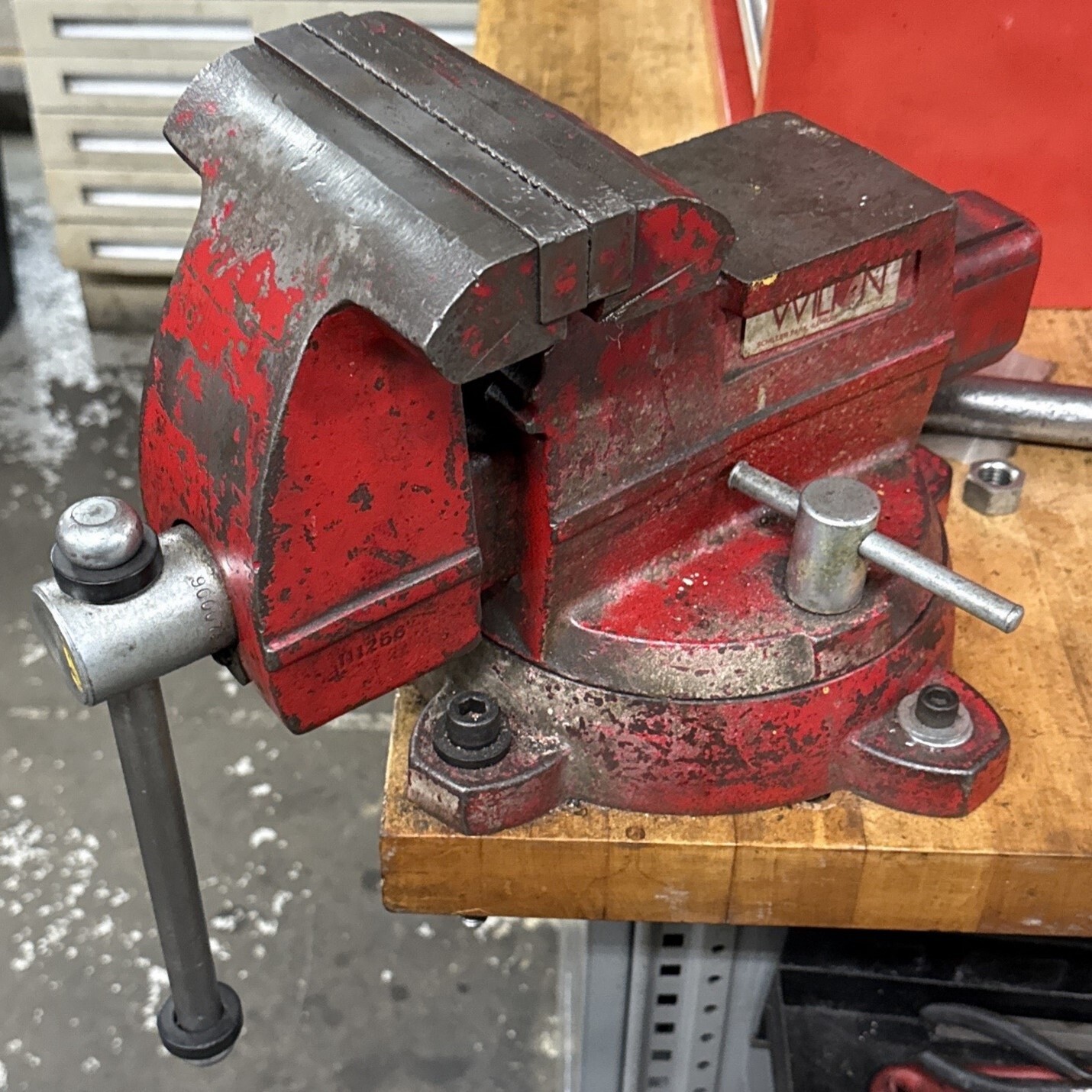
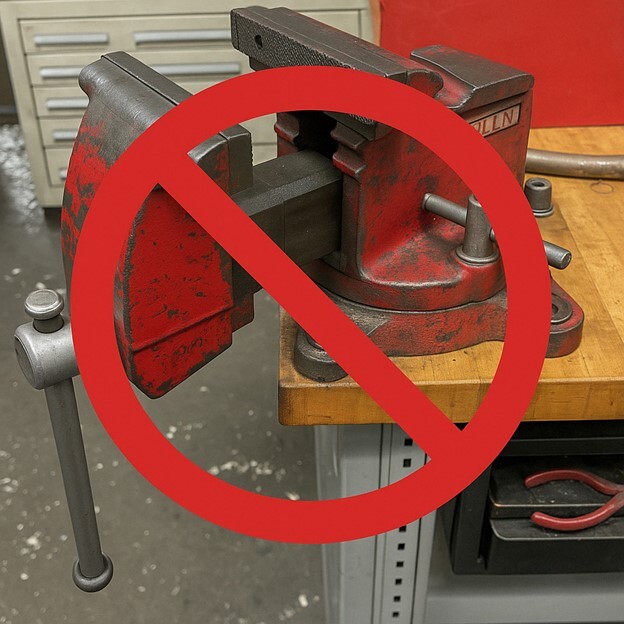
1. The vise must ALWAYS be left in the position shown in the first picture above: fully closed (loosely - not cranked tight), with the handle down. Leaving the jaws open creates a tripping / forklift thruput hazard as well as putting unnecessary strain on the vise and the bolts holding it to the table.
2. If you are using the vise to hold something that you are cleaning with WD40, ALWAYS have rags on the floor to catch drips. If this is not done it can cause a serious slipping hazard. The rags must then be removed once the vise is no longer in use.
3. Once you are finished using the vise, you MUST take 1-2 minutes to wipe it down. This is not a full clean, just a quick once over to keep the condition from degrading. This will help keep the work environment cleaner and safer.
4. NEVER clamp a tool at any surface that cuts metal! This includes the cutting edges of a drill bit, the teeth of a tap, etc. Doing so can cause serious damage to the tool, potentially rendering it unusable. The ONLY place a tool should be held in a vise is at the shank.
1. Always use protective eyewear when running the wire wheel.
2. Always run the vaccuum while using the wire wheel. This will help keep the wheel free of debris, which keeps it running efficiently and creates a safer work environment.
3. Always check the wire length before turning on the wire wheel. If it is below the acceptable level, the wheel MUST be changed out before it can be used. Using a worn-down wheel is a serious safety concern as the tool could rub against the metal center of the wheel and create sparks.
4. Once you are finished using the wire wheel, take 1-2 minutes to wipe it down. This does not need to be a full clean, but just a quick once over to keep it free of grime / debris.